

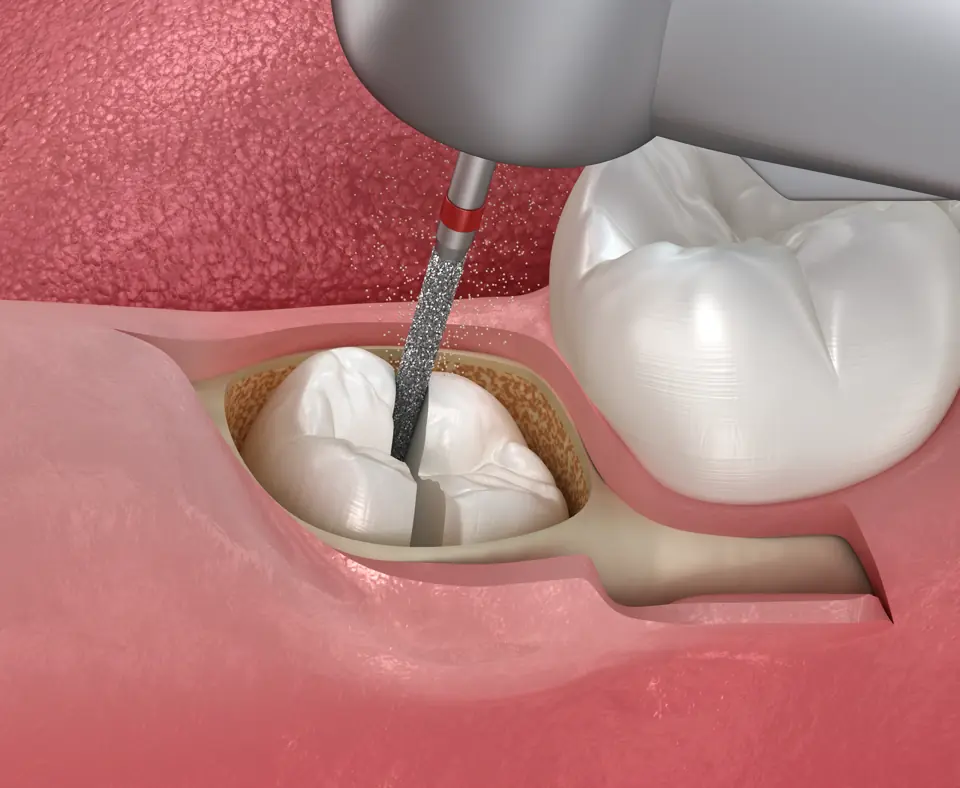
You may need a root canal when the tooth is infected but still strong enough to save. You may need an extraction when the tooth is cracked, loose, severely decayed, or too damaged to restore.
The difference comes down to whether the tooth can function safely after treatment. Pain alone does not decide it. A dentist must check the nerve, roots, bone support, bite pressure, and X-rays.
Understanding root canal vs tooth extraction helps patients avoid delay, protect nearby teeth, and choose the option that supports long-term oral health.
What Symptoms Indicate That I Need A Root Canal?
A root canal may be needed when the inner pulp of the tooth becomes inflamed or infected. This can happen from deep decay, a cracked tooth, repeated dental work, or trauma.
Common signs include lingering sensitivity to hot or cold, severe toothache, pain when biting, swollen gums, darkening of the tooth, or a pimple-like bump on the gum.
Pain can come and go. Some infected teeth stop hurting when the nerve dies, but the infection may still spread into the bone.
Do symptoms always mean treatment is urgent?
Dental symptoms should be checked quickly, especially swelling, fever, bad taste, or facial pain. These can suggest infection.
A dentist may recommend root canal treatment when the tooth structure is still restorable and the infection can be removed from inside the root canals.
When Is A Tooth Too Damaged For A Root Canal?
A tooth may be too damaged for a root canal when there is not enough healthy structure left to support a filling or crown. The tooth must be restorable after the infection is removed.
Severe cracks below the gumline, vertical root fractures, advanced bone loss, deep decay under the gum, or major mobility can make saving the tooth unrealistic.
A root canal removes diseased pulp. It does not repair every structural problem. If the foundation is weak, the tooth may still fail even after treatment.
Why restorability matters
The final crown or filling must seal the tooth and handle chewing pressure. If it cannot, extraction may be safer.
A dentist should explain whether the tooth can be rebuilt, how long it may last, and what risks remain after treatment. In many cases, a porcelain crown is recommended to strengthen and protect a root canal-treated tooth.
Is It Better To Save A Tooth With A Root Canal Or Extract It?
When a tooth can be saved predictably, root canal treatment is often preferred. Natural teeth help maintain chewing strength, bite alignment, jaw comfort, and spacing.
Extraction can be the right choice when the tooth is not restorable, infection is severe, or surrounding support is poor. Removing the tooth may stop pain and infection when saving it is not practical.
However, extraction creates a space. Nearby teeth can shift. Bite pressure can change. Bone may shrink over time. Replacement options such as implants, bridges, or partial dentures may add cost and treatment time.
Saving the tooth is not always cheaper
A root canal usually needs a final restoration, often a crown. Extraction may later need an implant or bridge.
The best value is the option that gives stable function, controlled infection, and realistic long-term success. If replacement becomes necessary, dental implants and dental bridges are common restorative options.
How Painful Is A Root Canal Compared To A Tooth Extraction?
Modern root canals are usually not as painful as many patients expect. Local anesthesia numbs the tooth, and the procedure is designed to remove the source of pain.
A tooth extraction is also performed with anesthesia. Pressure is common during the procedure, but sharp pain should not be felt.
Recovery may feel different. A root canal often causes mild soreness for a few days. Extraction creates an open healing site, so tenderness, swelling, and careful aftercare are expected.
Which recovery is easier?
For many patients, root canal recovery is easier because the tooth remains in place and no socket must heal. Extraction recovery may take longer because soft tissue and bone need time to close.
Complex extractions, impacted teeth, infection, or medical conditions can extend healing. Patients should follow aftercare instructions closely.
Can An Infected Tooth Heal Without A Root Canal?
An infected tooth usually cannot heal on its own once bacteria reach the pulp. Pain may fade if the nerve dies, but the infection can remain active around the root.
Antibiotics may reduce swelling temporarily, but they do not remove infected pulp inside the tooth. The source must be treated with a root canal, extraction, or another dental procedure.
Ignoring infection can lead to abscess formation, bone damage, facial swelling, and spread of infection. Dental infections should not be managed with pain medication alone.
When is it an emergency?
Seek urgent care for facial swelling, fever, trouble swallowing, trouble breathing, spreading redness, or severe uncontrolled pain.
A dentist can determine whether a root canal is appropriate or whether extraction is necessary to remove the infection safely. If severe pain or swelling develops unexpectedly, emergency dentistry may be needed for prompt evaluation.
How Does A Dentist Decide Between Extraction And Root Canal Treatment?
A dentist decides by examining symptoms, X-rays, tooth structure, gum health, bone support, bite force, infection size, and patient goals. The decision is both clinical and practical.
The dentist may test temperature response, tapping sensitivity, bite pain, mobility, gum pocket depth, and nerve vitality. X-rays can show decay depth, root shape, bone loss, abscesses, or fractures.
A tooth is more likely to be saved when roots are stable, bone support is healthy, decay is controlled, and enough structure remains for a crown.
Patient health also matters
Medical history, medications, immune health, diabetes control, smoking, and healing ability can affect the recommendation.
Cost, timing, anxiety, and replacement plans also matter. A clear treatment plan should compare risks, benefits, fees, and next steps before treatment begins. This is why a second opinion can be helpful when the choice feels unclear. Another dentist or endodontist may confirm the same plan, or they may find a way to save the tooth. The goal is not to choose the fastest option. The goal is to choose the option with the best chance of lasting for that patient safely.
What Is The Recovery Time For A Root Canal Versus Extraction?
Root canal recovery is often short. Many patients return to normal routines the same day or the next day, although chewing soreness can last a few days.
The tooth may need a crown after the root canal. Until the final restoration is placed, patients should avoid hard chewing on that side.
Extraction recovery usually takes longer. Initial clot formation happens in the first day. Gum healing often improves over one to two weeks, while deeper bone healing takes longer.
Aftercare differences
After a root canal, care usually focuses on soreness control and protecting the tooth until it is restored. After extraction, care focuses on protecting the blood clot, reducing swelling, and preventing dry socket.
Patients should avoid smoking, straws, forceful rinsing, and hard foods after extraction unless the dentist says otherwise.
Final Thoughts
A root canal is usually recommended when the tooth is infected but still strong enough to restore.
Extraction is considered when decay, cracks, bone loss, or instability make the tooth unlikely to survive. Pain level alone does not decide treatment. X-rays, testing, structure, infection, and long-term function all matter.
An infected tooth rarely heals without dental care, and antibiotics alone are not a permanent fix.
The safest choice comes from timely evaluation, clear diagnosis, and a treatment plan that protects comfort, function, and future oral health.
Protect Your Smile With Benage Dental Care
At Benage Dental Care, we help patients understand whether saving a tooth or removing it is the better path. Our team focuses on clear explanations, careful diagnosis, and practical treatment planning.
We believe patients deserve honest guidance before choosing root canal treatment or extraction. When a tooth can be saved safely, we explain how. When removal is the healthier option, we discuss replacement choices so the smile, bite, and confidence are protected.
If you’re experiencing tooth pain or signs of infection, book an appointment or contact our team for a comprehensive evaluation.