

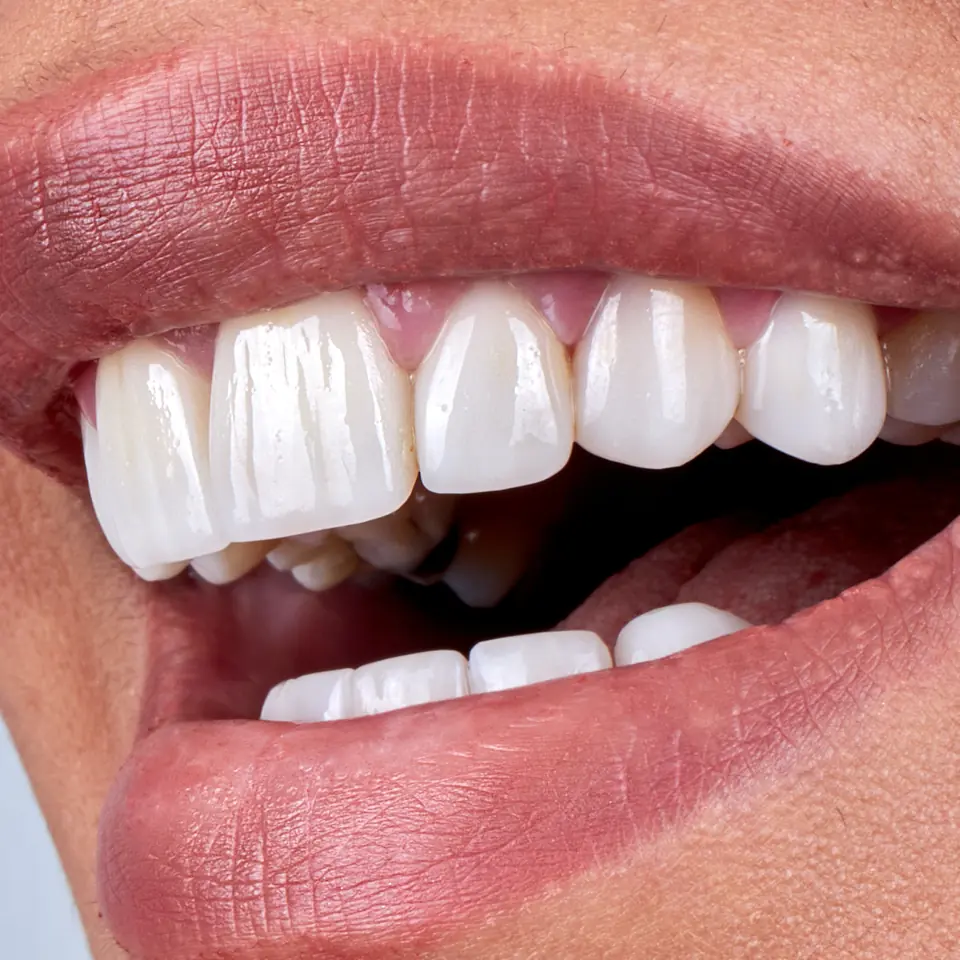
Teeth whitening can lighten natural teeth, but it does not change the underlying color of existing crowns or veneers. If your natural teeth become brighter, these restorations may appear darker by comparison. A dentist can evaluate the shade difference and determine whether whitening, professional cleaning, or restoration replacement is appropriate.
When considering teeth whitening with crowns and veneers, treatment planning matters. The goal is to coordinate the color of your natural teeth with existing dental work rather than assuming every tooth will respond to whitening in the same way.
Natural Teeth and Restoration Color: Why Whitening Works Differently
Natural teeth and dental restorations are made from different materials. These differences determine how they respond to whitening products.
The American Dental Association (ADA) explains that whitening agents can change the color of natural teeth but do not whiten tooth-colored restorations such as crowns, veneers, or fillings.
How Whitening Changes Natural Teeth
Professional teeth whitening commonly uses hydrogen peroxide or carbamide peroxide to reduce discoloration.
These ingredients penetrate natural tooth structures and interact with compounds responsible for staining.
Depending on the type of discoloration, treatment may make the teeth appear lighter.
However, whitening results vary according to the original tooth shade, enamel characteristics, staining, and treatment method.
Some discoloration responds more readily than others.
A dental examination helps determine whether whitening is likely to address a patient’s concerns.
Why Crowns Do Not Whiten
Dental crowns are restorations designed to cover and protect prepared teeth.
They may be fabricated from porcelain, zirconia, other ceramics, or combinations of materials.
Their appearance is determined by the selected restorative materials, manufacturing process, and underlying tooth structure.
Unlike natural teeth, crowns do not respond to conventional bleaching agents with a comparable change in shade.
For example, a porcelain crown selected to match a patient’s natural teeth may remain the same underlying shade after the surrounding teeth are whitened.
The crown has not necessarily become darker. The contrast has simply increased.
Why Veneers Do Not Respond to Whitening
Veneers are thin restorations bonded to the front surfaces of teeth.
Porcelain veneers are designed to provide a selected appearance, including tooth color, shape, and translucency.
Composite veneers also have a manufactured shade determined by the restorative material.
Whitening products do not reliably lighten either material the way they lighten natural tooth structure.
A person with several veneers may therefore notice that untreated natural teeth become brighter while the veneers retain their original color.
This is an important consideration before beginning whitening.
Why a Shade Mismatch Can Develop
A shade mismatch occurs when a dental restoration no longer blends with the natural teeth around it.
This may happen after whitening, but there are other possible explanations.
Whitening Changes the Surrounding Teeth
Consider a patient in Cleburne who received a crown on a front tooth several years ago.
The crown was originally selected to match the surrounding natural teeth.
Later, the patient decides to whiten their smile.
If the natural teeth become noticeably lighter, the existing crown may stand out.
The difference is particularly visible when the restoration sits near the front of the mouth.
A crown on a back tooth may be less noticeable because it is not as prominent during smiling and conversation.
Natural Teeth Can Change Color Over Time
Natural teeth can gradually darken because of aging, staining, and changes within the tooth structure.
Crowns and veneers generally maintain their manufactured underlying shade, although their surfaces may collect stains or experience other changes.
As a result, the relationship between natural teeth and restorations can change even without whitening treatment.
In some cases, professional cleaning may improve the appearance of surface-stained restorations.
However, removing superficial stains is different from changing the restoration’s original color.
Material and Lighting Affect Appearance
Dental color matching involves more than selecting a single shade.
Natural teeth have variations in translucency, brightness, and color across their surfaces.
The American Dental Association recognizes that restorative materials have different optical characteristics.
Lighting can also affect how color differences appear.
A restoration that looks acceptable under one lighting condition may appear slightly different in daylight.
The dentist should consider the overall appearance rather than relying on a single photograph or shade description.
Not Every Mismatch Requires Replacement
A small difference may be acceptable to the patient and may not require treatment.
If the restoration is healthy, comfortable, and functioning properly, replacement solely for a minor cosmetic difference may be unnecessary.
The dentist should explain the available options and the risks associated with replacing existing dental work.
Whitening Before New Restorations: Why Timing Matters
When patients plan to receive new crowns or veneers, whitening is often considered before the restorations are manufactured.
This allows the dentist to coordinate the new restoration shade with the patient’s intended natural tooth color.
Establish the Desired Tooth Shade First
Suppose a patient wants a brighter smile and also needs a crown on a visible tooth.
If the crown is manufactured before whitening, its selected shade may match the patient’s original tooth color.
Whitening afterward could make the natural teeth lighter than the new crown.
Completing appropriate whitening first may help the dentist select a restoration shade that better matches the resulting appearance.
At Benage Dental Care of Cleburne, our total smile makeover services address coordinated cosmetic treatments, including professional whitening and dental restorations.
Allow the Tooth Shade to Stabilize
Natural teeth may appear temporarily different immediately after whitening because of changes in hydration and other treatment-related effects.
The dentist may recommend waiting before finalizing the shade for a new crown or veneer.
Some professional whitening instructions recommend approximately two weeks between whitening and final restorative shade selection, but the appropriate interval depends on the specific products and treatment plan.
Patients should follow their dentist’s recommended schedule rather than assuming a universal waiting period.
Coordinate Whitening With Veneer Planning
Patients considering porcelain veneers in Cleburne should discuss whitening before the veneers are fabricated.
This is especially important when only some visible teeth will receive veneers.
For example, two veneers may need to blend with several surrounding natural teeth.
If the natural teeth are whitened before veneer shade selection, the dentist can plan the restorations around the desired appearance.
Veneers also require careful consideration because placing porcelain veneers generally involves removing some tooth enamel.
They should not be selected solely as a convenient way to correct a minor color concern without discussing alternatives.
Options for Existing Crowns and Veneers That No Longer Match
Patients who already have crowns or veneers may still be candidates for teeth whitening.
However, the treatment plan should account for restorations that will not change shade.
The dentist may recommend different approaches depending on the cause and visibility of the mismatch.
Professional Cleaning and Polishing
Some restorations develop superficial staining from coffee, tea, tobacco, and other sources.
A dental professional may be able to reduce certain surface stains using an appropriate cleaning or polishing method.
However, this does not bleach the restorative material.
The original manufactured shade remains unchanged.
Aggressive polishing or abrasive products should be avoided because they may damage the surface of certain restorations.
Adjusting Whitening Expectations
If a patient has several visible crowns or veneers, pursuing the lightest possible natural tooth shade may create an unwanted contrast.
A more conservative whitening goal may produce a better overall match.
For example, a patient with two front crowns may prefer modest whitening if the crowns already blend reasonably well with the remaining teeth.
The dentist can explain the likely limitations before treatment begins.
Replacing a Crown
A crown that no longer matches surrounding teeth may sometimes be replaced with one manufactured in a different shade.
However, crown replacement involves clinical considerations beyond appearance.
The dentist must evaluate the supporting tooth, existing restoration, bite, and surrounding tissues.
Removing a functional crown can involve risks, including damage to the underlying tooth or the need for additional treatment.
Replacement should be considered only after reviewing the potential benefits and disadvantages.
Patients interested in understanding long-term restoration considerations can also read about dental crown lifespan and what patients notice most.
Replacing Veneers
A porcelain veneer cannot simply be bleached to a lighter shade.
If there is a significant mismatch, replacing the veneer may be an option.
However, removing and replacing veneers requires careful assessment of the underlying tooth structure.
Patients should understand that veneer replacement may involve additional tooth preparation and expense.
A minor shade difference does not automatically justify replacing otherwise serviceable restorations.
For additional information about veneer treatment considerations, see Considering Veneers? Here’s Why They Could Work for You.
What About Tooth-Colored Fillings and Bonding?
Composite fillings and dental bonding materials also resist conventional whitening.
These materials may become more noticeable after the surrounding natural teeth are lightened.
A dentist may determine whether polishing, repair, or replacement is appropriate.
The same shade-coordination principle applies to visible fillings and bonding as it does to crowns and veneers.
Sensitivity and Suitability Assessment Before Whitening
Although professional whitening is a common cosmetic procedure, it is not appropriate for every patient.
The ADA recommends a dental examination before bleaching to identify oral health problems, existing restorations, and factors that could affect treatment.
Check for Existing Dental Problems
Before whitening, the dentist should evaluate the condition of the teeth and gums.
Untreated decay, gum inflammation, exposed roots, or other concerns may need attention first.
The examination should also identify existing crowns, veneers, fillings, and bonding.
This provides a clearer picture of which teeth may respond to whitening and where mismatches could develop.
Understand Possible Sensitivity
Temporary tooth sensitivity and gum irritation are among the most common side effects of whitening.
The likelihood and severity can depend on the product, concentration, application method, and individual susceptibility.
Patients who already experience sensitivity should discuss this before treatment.
The dentist may recommend an adjusted approach or determine that whitening should be postponed.
Whitening should not cause persistent or severe discomfort that patients are expected to tolerate.
Professional Whitening and At-Home Products
Both dentist-supervised and over-the-counter whitening products can affect natural teeth.
However, whitening strips and gels do not overcome the color limitations of crowns or veneers.
Using more product or extending treatment beyond recommended instructions will not make the restorations bleach like natural enamel.
Excessive whitening may also increase sensitivity or irritation.
At Benage Dental Care, we offer professional teeth whitening in Cleburne, TX, including published in-office and take-home whitening options.
We can evaluate your existing dental work and discuss whether whitening fits your goals.
Plan a Coordinated Smile Consultation in Cleburne
Patients who have crowns or veneers should discuss their existing restorations before starting whitening.
A consultation can help identify whether whitening will improve the overall appearance of the smile or create a noticeable shade difference.
What Your Dentist Should Evaluate
A useful consultation may include:
- The current shade of your natural teeth
- The number and location of crowns or veneers
- The condition of existing restorations
- Whether visible discoloration is superficial or related to the underlying materials
- The likelihood of a noticeable mismatch after whitening
- Any planned crown, veneer, or bonding treatment
- Oral health conditions affecting whitening suitability
These findings help determine whether whitening alone is appropriate or whether a coordinated treatment plan would better address your concerns.
Discuss the Complete Treatment Sequence
If you are planning new restorations, ask whether whitening should occur first.
If you already have restorations, discuss how much whitening may be appropriate and what options are available if the shades do not match.
At Benage Dental Care, Drs. Mark and AnneMarie Benage provide cosmetic dentistry services for patients in Cleburne and throughout Johnson County.
We can assess your current dental work and explain the treatment options appropriate for your smile.
FAQs
Does Whitening Work on Crowns?
No. Conventional teeth whitening does not change the underlying shade of a dental crown. Whitening can lighten surrounding natural teeth, potentially creating a color mismatch. Surface stains on a crown may sometimes be reduced through professional cleaning, but this does not bleach the crown material.
Can Porcelain Veneers Be Whitened?
No. Porcelain veneers have a selected manufactured shade that does not respond to whitening gels like natural tooth enamel. If surrounding teeth become lighter, the veneers may appear darker by comparison. A dentist can assess whether cleaning or replacement is appropriate.
Should Whitening Happen Before a New Crown?
Whitening is often considered before creating a new visible crown so its shade can be matched to the desired natural tooth color. The dentist may recommend allowing the whitened shade to stabilize before selecting the final restoration color.
What if My Crown No Longer Matches?
A dentist can examine the crown and surrounding teeth to identify the cause of the difference. Options may include professional cleaning, accepting a minor mismatch, or replacing the crown when appropriate. A healthy crown does not necessarily need replacement for cosmetic reasons alone.
Can Whitening Damage Existing Crowns or Veneers?
Whitening products do not normally lighten crowns or veneers, but exposure to bleaching agents can affect certain restorative materials or bonding surfaces under some conditions. The ADA recommends evaluating existing restorations before whitening. Patients should follow dentist-approved products and instructions.
Can I Whiten My Natural Teeth if I Have Several Veneers?
Possibly. Natural teeth may still respond to whitening even when veneers are present. However, the veneers will retain their underlying shade, and color differences may become noticeable. A dentist should assess the position of the veneers and discuss realistic expectations before treatment.
Coordinate Your Smile With Benage Dental Care
Whitening natural teeth can improve their appearance, but crowns and veneers require a different approach to color matching. Planning treatment around your existing restorations can help you avoid unexpected shade differences.
At Benage Dental Care of Cleburne, we offer professional teeth whitening, porcelain veneers, and dental crown services. Our team can evaluate your current restorations, discuss your cosmetic goals, and recommend an appropriate treatment sequence.
Whether you are planning a new crown or considering whitening with existing veneers, understanding your options is the first step.
Call Benage Dental Care at (817) 641-6261 or schedule a consultation at 302 North Ridgeway Drive, Cleburne, TX 76033 to discuss whitening and restoration shade matching.