
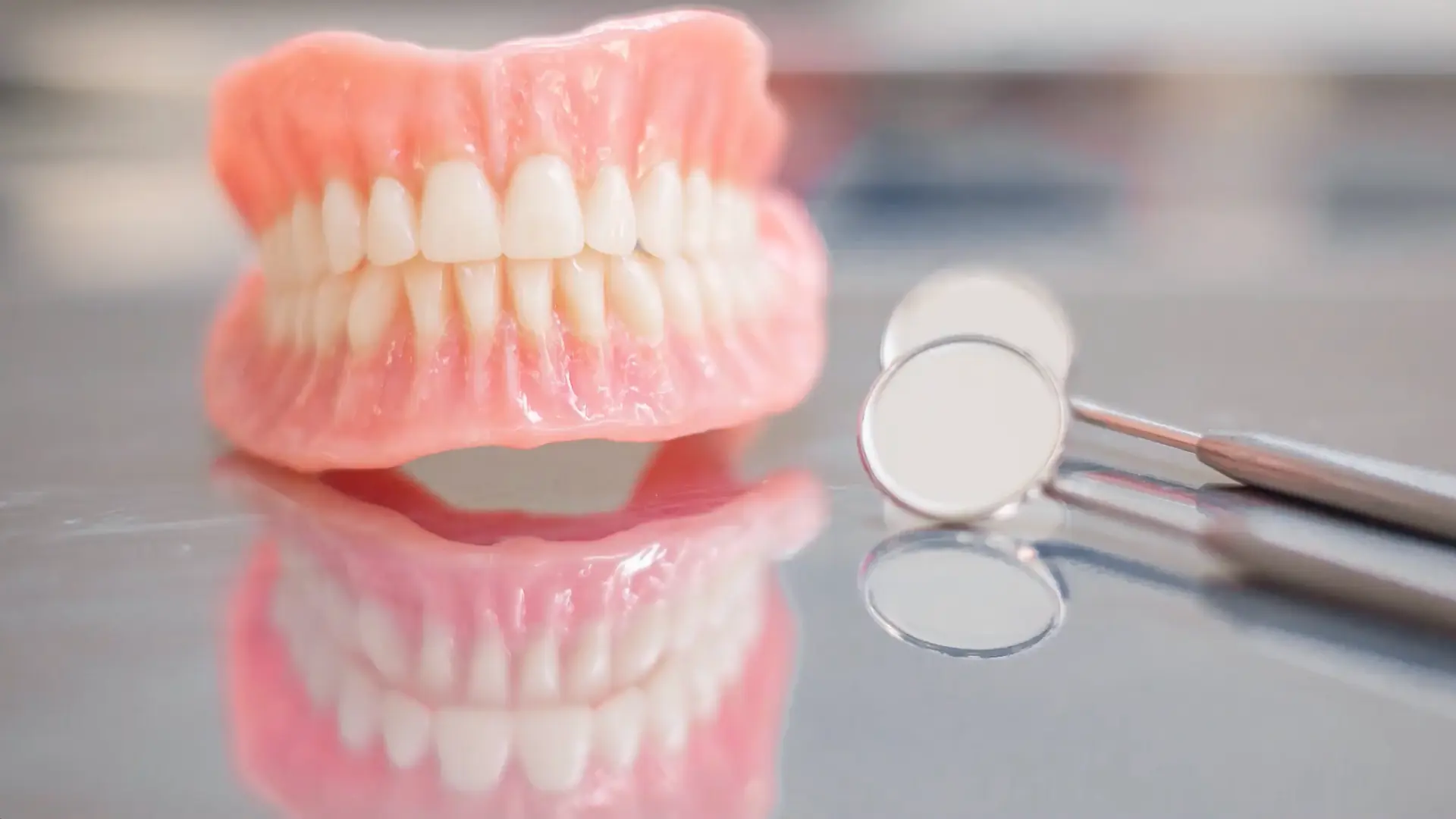
Dentures come in several forms, including full dentures, partial dentures, flexible dentures, and implant-supported dentures, each designed to address different levels of tooth loss. The right option depends on your oral health, number of missing teeth, lifestyle preferences, budget, and long-term treatment goals.
Missing teeth can affect appearance, chewing ability, speech, and confidence. Modern denture solutions offer more comfort, stability, and natural-looking results than ever before. Understanding the available options helps patients make informed decisions and choose a restoration that supports both daily function and long-term oral health.
What Are The Different Types Of Dentures Available?
Full Dentures
Full dentures replace an entire arch of missing teeth.
These restorations rest on the gums and are custom-made to restore appearance and function. Full dentures may be used for the upper arch, lower arch, or both.
Many patients choose full dentures when all natural teeth in a dental arch have been lost or require extraction.
Partial Dentures
Partial dentures replace several missing teeth while preserving remaining healthy teeth.
They are designed to fit around existing teeth and help restore chewing ability, speech, and appearance. Partial dentures may include metal or acrylic frameworks depending on the treatment plan.
In some cases, patients may also explore alternatives such as dental bridges when replacing one or more missing teeth.
Flexible Dentures
Flexible dentures use lightweight materials that provide increased flexibility and comfort.
These restorations adapt more naturally to the shape of the mouth and often eliminate the need for visible metal clasps.
Many patients appreciate their comfortable fit and aesthetic advantages.
Implant-Supported Dentures
Implant-supported dentures attach to dental implants placed in the jawbone.
This option offers enhanced stability and reduces movement during speaking and eating. Implant-supported solutions are often recommended for patients seeking greater retention and long-term support.
Patients interested in this option can learn more about dental implant solutions.
Immediate Dentures
Immediate dentures are placed shortly after tooth extraction.
This allows patients to avoid going without teeth during the healing process. Adjustments may be required as the gums heal and change shape over time.
What Is The Difference Between Full And Partial Dentures?
Understanding Full Dentures
Full dentures replace all teeth within a dental arch.
They are commonly recommended when no healthy natural teeth remain. These restorations help restore facial support, improve speech, and allow patients to eat a wider variety of foods.
Understanding Partial Dentures
Partial dentures are designed for patients who still have healthy natural teeth.
The restoration fills gaps created by missing teeth while helping maintain proper alignment and bite function.
Preserving natural teeth can provide additional stability and support.
Functional Differences
Full dentures rely entirely on gum support or implants for stability.
Partial dentures gain support from both the gums and remaining natural teeth. This often provides additional retention and reduces movement.
Cost Considerations
Treatment costs vary based on materials, complexity, and the number of teeth being replaced.
Partial dentures may cost less than full dentures in some situations because fewer replacement teeth are required.
Choosing Between The Two
The number and condition of remaining teeth typically determine whether full or partial dentures are appropriate.
A dental examination helps identify the most suitable treatment option. Maintaining regular visits with a general dentistry provider can help patients evaluate their restorative options as oral health needs change.
Are Flexible Dentures Better Than Traditional Ones?
What Makes Flexible Dentures Different?
Flexible dentures use softer, more adaptable materials than traditional acrylic dentures.
This flexibility allows them to conform more comfortably to the mouth and often improves patient comfort.
Comfort Benefits
Many patients report that flexible dentures feel lighter and less bulky.
The material may reduce irritation in certain areas and improve overall wearability during daily activities.
Aesthetic Advantages
Flexible dentures often eliminate visible metal clasps.
This creates a more natural appearance and helps the restoration blend seamlessly with surrounding teeth and gums.
Advantages Of Traditional Dentures
Traditional dentures remain a highly effective treatment option.
They are durable, widely available, and often easier to modify or repair if adjustments become necessary.
Traditional materials also provide predictable long-term performance.
Which Option Is Better?
Neither option is universally superior.
The ideal choice depends on individual needs, oral health conditions, cosmetic preferences, and treatment goals. A dentist can help determine which solution offers the best balance of comfort, function, and durability.
Who Is A Good Candidate For Implant-Supported Dentures?
Understanding Implant Support
Implant-supported dentures use dental implants to anchor the restoration securely.
The implants function as artificial tooth roots and provide exceptional stability compared to traditional removable dentures.
Patients With Significant Tooth Loss
Individuals missing most or all of their teeth are often strong candidates.
Implant support helps improve chewing efficiency and reduces denture movement during speaking and eating.
Adequate Bone Structure
Successful implant placement requires sufficient jawbone support.
Patients with adequate bone volume are generally better candidates for implant-supported restorations. In some situations, bone grafting may help create the necessary foundation.
Patients Seeking Improved Stability
Many patients become frustrated with denture movement.
Implant-supported dentures offer greater retention and can significantly improve confidence during social interactions and meals.
Long-Term Benefits
Because implants stimulate the jawbone, they may help reduce bone loss over time.
This added benefit contributes to long-term oral health and facial support.
Many patients exploring Types of Dentures find implant-supported options appealing because of their stability and durability. Patients researching treatment options may also find value in learning about common dental implant myths.
How Do You Choose The Right Denture Option For Your Lifestyle?
Consider Your Oral Health
The condition of your gums, jawbone, and remaining teeth plays an important role in treatment selection.
A comprehensive evaluation helps identify which denture solutions are most appropriate.
Think About Daily Activities
Lifestyle factors matter.
Patients who frequently speak in public, dine socially, or desire maximum stability may prioritize different features than those seeking a simple replacement option.
Evaluate Maintenance Requirements
Different denture types require varying levels of maintenance.
Traditional removable dentures may need periodic adjustments, while implant-supported solutions involve additional oral hygiene considerations.
Balance Budget And Long-Term Goals
Every treatment option carries different costs and benefits.
Patients should consider both initial expenses and long-term value when comparing restorative solutions.
Work With An Experienced Dentist
A personalized consultation provides the most reliable guidance.
Dentists evaluate oral health, discuss treatment goals, and recommend options that align with both functional needs and lifestyle preferences. Scheduling a dental appointment is the best way to receive personalized recommendations.
Can Dentures Look Natural And Feel Comfortable?
Advances In Modern Denture Design
Modern dentures are far more realistic than older generations.
Advanced materials, improved fabrication techniques, and customized designs create natural-looking results that closely resemble real teeth.
Customized Appearance
Dentures are tailored to each patient’s facial features, smile characteristics, and oral anatomy.
Tooth shape, size, color, and positioning can all be customized to create a natural appearance.
Improved Comfort
Today’s dentures are designed for enhanced comfort and fit.
Precise impressions and advanced manufacturing techniques help minimize irritation and improve stability.
Adaptation Period
Most patients require a short adjustment period after receiving new dentures.
As the mouth adapts, speaking and eating typically become more comfortable and natural.
Long-Term Satisfaction
Patients seeking Dentures in Cleburne, TX often discover that modern denture solutions provide excellent aesthetics, comfort, and functionality when properly designed and maintained.
Regular dental visits help ensure optimal fit and long-term success.
Find the Denture Solution That Fits Your Needs
At Benage Dental Care, we understand that every patient’s situation is unique. We take the time to evaluate your oral health, discuss your concerns, and explain all available denture options so you can make a confident decision.
Whether you need full dentures, partial dentures, flexible dentures, or implant-supported solutions, we are committed to helping you restore your smile and improve your quality of life. Our goal is to provide personalized care and comfortable restorations that support both function and confidence for years to come.
If you have questions about treatment options or costs, feel free to contact our team to discuss your needs.
Final Thoughts
Modern dentures offer a wide range of solutions for patients experiencing tooth loss. Full dentures, partial dentures, flexible dentures, and implant-supported dentures each provide unique advantages depending on individual needs and oral health conditions. The right option depends on factors such as remaining teeth, jawbone support, lifestyle preferences, budget, and long-term goals.
Advances in dental technology have significantly improved comfort, appearance, and function. Working with an experienced dentist helps ensure that the selected denture solution restores confidence, improves daily function, and supports lasting oral health and overall well-being.