

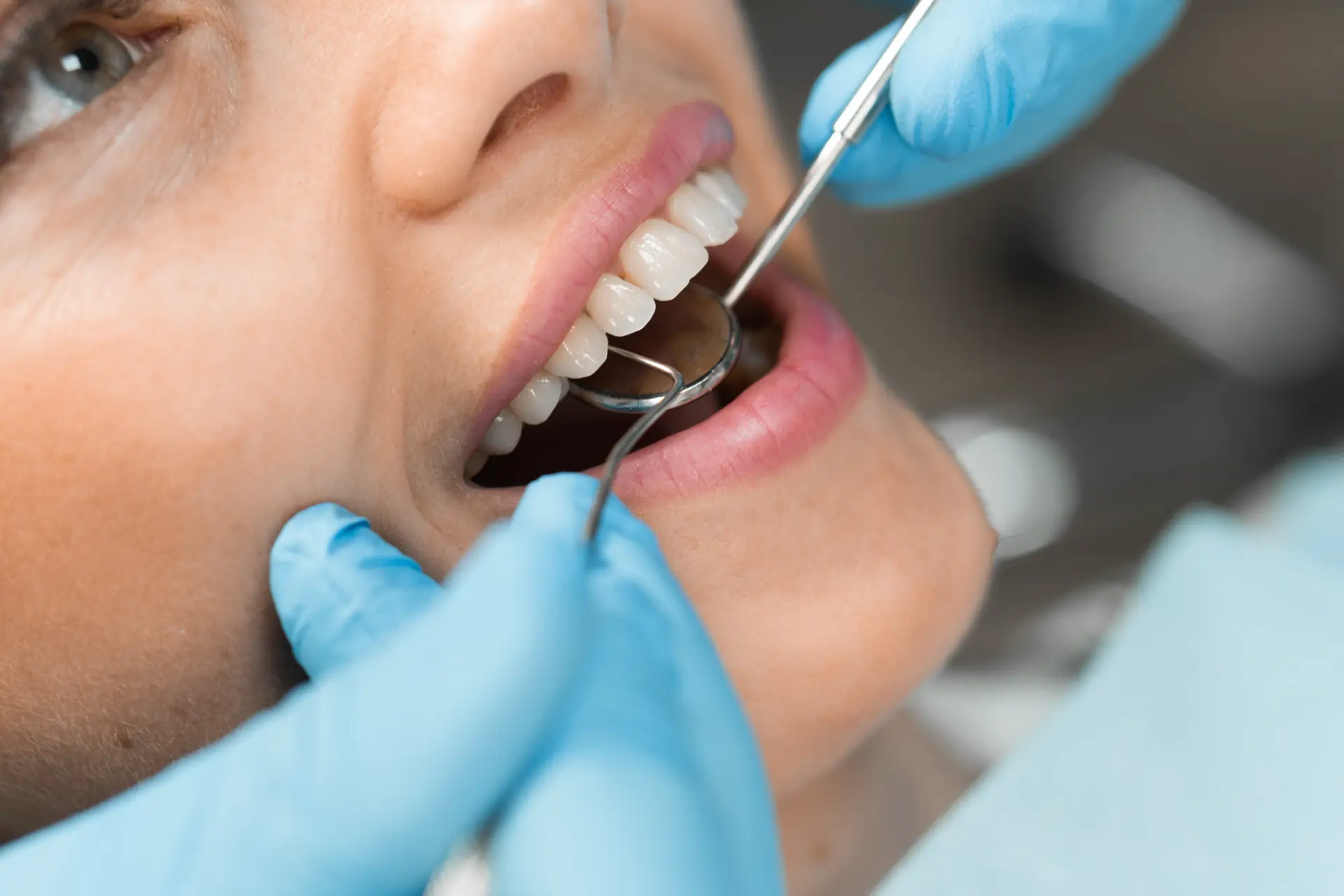
A Dental Exam and Cleaning is a preventive dental appointment that evaluates your oral health and removes plaque and tartar buildup that cannot be eliminated through brushing and flossing alone. During the visit, your dentist examines your teeth, gums, and oral tissues while a dental hygienist performs a professional cleaning to help prevent future dental problems.
Routine dental visits play an important role in maintaining healthy teeth and gums. Regular examinations and cleanings help identify concerns early, support long-term oral health, and reduce the risk of more extensive dental treatment in the future.
What Does A Dentist Check During A Routine Exam?
Evaluating Your Teeth
One of the primary goals of a routine exam is to assess the condition of your teeth.
The dentist looks for cavities, cracks, worn surfaces, damaged restorations, and other signs of structural concerns. Early identification often allows treatment before problems become more serious.
Checking Gum Health
Healthy gums are essential for maintaining strong teeth.
During the examination, the dentist evaluates the gums for redness, swelling, bleeding, recession, and other indicators of gum disease. Monitoring gum health helps prevent long-term complications and may identify the need for gum disease treatment.
Examining Existing Dental Work
Crowns, fillings, bridges, implants, and dentures require regular evaluation.
The dentist checks existing restorations to ensure they remain functional and free from damage or excessive wear. Patients with crowns may also find value in learning about the lifespan of dental crowns.
Assessing Bite And Jaw Function
A comprehensive exam may include evaluating how the teeth fit together.
Bite problems, jaw discomfort, grinding habits, and abnormal wear patterns can sometimes indicate underlying issues that require attention.
Patients experiencing jaw discomfort may benefit from discussing TMJ and migraine treatment options.
Screening Oral Tissues
The examination extends beyond the teeth and gums.
The dentist checks the tongue, cheeks, palate, throat, and surrounding tissues for abnormalities. Routine oral cancer screenings are often included as part of preventive care.
How Long Does A Dental Cleaning Take?
Typical Appointment Length
Most professional cleanings are completed within 30 to 60 minutes.
The exact length depends on the amount of plaque and tartar present, the condition of the gums, and whether additional evaluations or imaging are required during the visit.
New Patient Appointments
A first-time patient appointment may take longer.
Additional time is often needed for medical history reviews, diagnostic imaging, comprehensive examinations, and discussions regarding oral health concerns and treatment recommendations.
Patients preparing for an initial appointment may find it helpful to review what to expect during a first dental visit.
Factors That Affect Cleaning Duration
Several factors can influence appointment length.
Patients with significant tartar buildup, gum disease, or extensive dental restorations may require additional cleaning time to ensure thorough care.
Periodontal Maintenance Visits
Patients undergoing treatment for gum disease often require more detailed cleanings.
These appointments may take longer than standard preventive visits because deeper areas around the teeth and gums require additional attention.
Efficient And Thorough Care
Dental teams work to balance efficiency with quality.
The goal is to remove harmful buildup thoroughly while ensuring patient comfort and maintaining a positive experience throughout the appointment.
Is Dental Cleaning Painful?
Most Cleanings Are Comfortable
For many patients, professional dental cleanings cause little to no discomfort.
The process primarily involves removing plaque, tartar, and surface stains while polishing the teeth and supporting gum health.
Factors That May Increase Sensitivity
Patients with gum inflammation, exposed tooth roots, tooth sensitivity, or significant tartar accumulation may experience temporary discomfort during certain portions of the cleaning.
These sensations are usually mild and short-lived.
Communicating With The Dental Team
Patients should always inform the hygienist about sensitivity or discomfort.
Adjustments can often be made to improve comfort throughout the procedure. Open communication helps ensure a better experience.
Benefits Outweigh Temporary Discomfort
Even when mild sensitivity occurs, professional cleanings provide important oral health benefits.
Removing harmful buildup helps reduce the risk of cavities, gum disease, and other preventable dental conditions.
Comfort Has Improved Over Time
Modern dental techniques and equipment have made cleanings more comfortable than ever.
Most patients find routine cleanings easy to tolerate and appreciate the feeling of cleanliness afterward.
How Often Should You Get A Professional Cleaning?
Standard Recommendations
Most individuals benefit from professional dental cleanings every six months.
This schedule allows dental professionals to monitor oral health regularly while removing plaque and tartar before significant problems develop.
Individual Risk Factors
Some patients require more frequent cleanings.
Those with gum disease, a history of frequent cavities, diabetes, tobacco use, or other risk factors may benefit from shorter intervals between appointments.
Preventive Benefits
Regular cleanings help maintain healthier teeth and gums.
Consistent preventive care reduces the likelihood of developing more serious oral health conditions that may require extensive treatment.
Monitoring Changes Over Time
Routine appointments allow dentists to track oral health changes.
This ongoing evaluation helps identify developing concerns and provides opportunities for early intervention when necessary.
Personalized Recommendations
The ideal cleaning schedule varies from patient to patient.
Your dentist can recommend a frequency based on your individual oral health needs and risk profile. Consistent visits are a key part of preventive dental care.
What Tools Are Used During A Dental Cleaning?
Dental Mirrors
Small dental mirrors are commonly used throughout the cleaning process.
These instruments help hygienists and dentists view areas of the mouth that are difficult to see directly and improve examination accuracy.
Scalers
Scalers are specialized instruments used to remove plaque and tartar from tooth surfaces.
Both manual and ultrasonic scalers may be used depending on the amount of buildup present and the patient’s needs.
Ultrasonic Cleaning Devices
Ultrasonic instruments use gentle vibrations and water to help break apart tartar deposits.
These tools often improve efficiency while supporting patient comfort during the cleaning process.
Polishing Tools
After tartar removal, a polishing device is typically used to smooth tooth surfaces.
Polishing helps remove surface stains and leaves the teeth feeling clean and refreshed.
Floss And Preventive Materials
Floss may be used to clean between teeth and verify that plaque and debris have been removed effectively.
Some patients may also receive fluoride treatments as part of preventive care recommendations.
Modern Dental Technology
Patients receiving dental cleaning services often benefit from modern equipment designed to improve accuracy, efficiency, and overall patient comfort during preventive appointments.
Can Routine Exams Detect Early Dental Problems?
Identifying Cavities Early
One of the greatest advantages of a Routine Dental Checkup is early detection.
Small cavities can often be identified before they cause pain or significant tooth damage. Early treatment is typically simpler and more conservative, often requiring only composite fillings.
Detecting Gum Disease
Gum disease frequently develops without obvious symptoms.
Routine examinations allow dentists to identify inflammation, bleeding, and early periodontal changes before more serious damage occurs.
Monitoring Existing Restorations
Fillings, crowns, and other restorations can wear over time.
Regular exams help identify damage, leakage, or deterioration before more extensive treatment becomes necessary.
Screening For Oral Cancer
Oral cancer screenings are often included in routine dental evaluations.
Early detection significantly improves treatment outcomes and supports overall health.
Evaluating Bite And Jaw Issues
Changes in bite alignment, grinding habits, and jaw function can be identified during routine appointments.
Addressing these concerns early may help prevent discomfort and future complications.
Supporting Long-Term Oral Health
Routine examinations provide valuable information that supports preventive care and personalized treatment planning.
Detecting concerns early remains one of the most important benefits of regular dental visits.
Keep Your Smile Healthy With Regular Care
At Benage Dental Care, we believe routine dental visits are one of the most effective ways to protect your oral health. We take time to perform thorough examinations, provide professional cleanings, answer questions, and help patients understand their dental needs.
Our goal is to make preventive care comfortable, informative, and beneficial for every patient. Whether you are due for a routine cleaning or returning after a long absence, we are committed to helping you maintain a healthy smile through personalized care and ongoing support.
If it’s time for your next preventive visit, you can book an appointment with our team today.
Final Thoughts
A routine dental exam and cleaning provides essential preventive care that helps maintain healthy teeth, gums, and oral tissues. During the visit, dentists evaluate overall oral health, identify potential concerns, and monitor existing dental work while hygienists remove plaque and tartar buildup through professional cleaning.
These appointments are typically comfortable, efficient, and valuable for preventing future complications. Regular cleanings and examinations support early detection of cavities, gum disease, oral cancer, and other conditions. Consistent preventive care remains one of the most effective ways to preserve long-term oral health and maintain a confident smile.